What is data sharing? Benefits, risks, and best practices explained



Data is constantly exchanged between people, systems, and organizations. Data sharing enables this exchange, supporting everyday operations across industries such as finance, healthcare, education, and more.
This guide explains what data sharing is and how it works, along with the benefits, risks, and best practices involved.
What is data sharing?
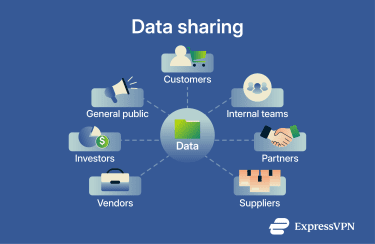 Data sharing is the practice of making an organization’s data available to multiple systems, applications, and users. This can also include internal teams and external entities such as other organizations and stakeholders. It typically involves granting access to specific datasets via databases, cloud platforms, or through the use of file exchange services.
Because shared data can include sensitive or regulated information, access is usually governed by policies, permissions, and security controls. Effective data sharing requires balancing accessibility with requirements for privacy, security, and compliance.
Why data sharing matters in the digital age
Organizations generate and use large amounts of data across a wide range of activities. For example, businesses may use customer data to improve their products and services, while researchers in fields like science and healthcare rely on data to make discoveries and important advances.
Data sharing allows information to move between systems and users where appropriate, which can support coordination, analysis, and decision-making. At the same time, sharing practices must account for risks such as unauthorized access, data misuse, or regulatory requirements, particularly when data moves beyond its original context.
How does data sharing work?
The way data sharing works varies depending on the systems, tools, and requirements involved. In general, it involves making data accessible to authorized users or systems, often through defined interfaces, storage platforms, or transfer protocols. Access is typically governed by permissions, security controls, and data management policies.
Common data sharing methods
Some of the most common methods and tools used for data sharing include:
- Data warehouses: Centralized data management systems designed to store large amounts of data from a diverse range of sources, usually for analytical reporting or Business Intelligence (BI) purposes.
- Data lakehouses: Unified data management architectures for storage, management, and analysis of both structured and unstructured datasets.
- Application programming interfaces (APIs): A set of rules or protocols that allow different pieces of software to communicate with one another and exchange data in real time.
- Cloud storage solutions: Scalable services that store large amounts of data online, providing remote access to files and folders.
- File Transfer Protocol (FTP/SFTP): FTP is a network protocol used for transferring files from one device to another across private networks or the internet. The more modern variant of this protocol, Secure File Transfer Protocol (SFTP), adds encryption and authentication features.
- Blockchain technologies: Distributed ledger systems that record transactions in a way that is resistant to modification. In data sharing contexts, they are typically used to track or verify data exchanges rather than store large datasets directly.
- Data exchange/file sharing platforms: Specialized platforms that are designed specifically for the exchange of datasets or even individual files, though their policies and standards of privacy and security can vary.
Types of data sharing
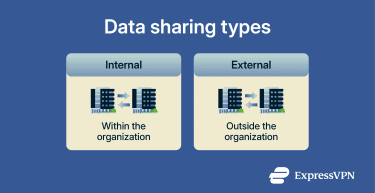 Data sharing can be classified into categories based on who can access the data. Some data is only shared internally or kept relatively private, while other datasets are shared with large numbers of other users, or even with the general public.
Internal data sharing
Internal data sharing refers to the sharing of information within the organization that owns the data in question. A business, for example, might decide to share its customer, sales, or marketing data with various teams and departments.
External data sharing
External data sharing involves sharing files and information with parties outside of the organization. A company might want or need to share key pieces of data with its suppliers, vendors, or investors, for example.
Data classification in data sharing
Data can also be classified based on how sensitive it is and how widely it can be accessed. These distinctions affect how data is handled, protected, and shared.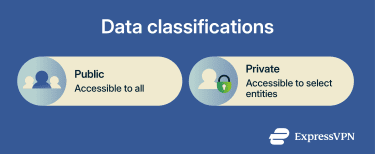
Public data
Public data refers to information that is accessible to all. Governments, for example, might release public data in the form of census statistics or environmental reports, making these files freely accessible.
Public data can often prove useful; however, it’s important to ensure that any sensitive elements within that data are removed or anonymized prior to its release.
Private data
Private, proprietary, or confidential data refers to information that is only accessible to specific, selected individuals or entities. Often, this sort of data may include sensitive pieces of information that require secure handling, such as people’s personal details, health records, financial figures, or trade secrets.
Organizations have to carefully manage private data when sharing it with other entities in order to comply with relevant data protection regulations and to mitigate risks of the data being lost, leaked, or accessed by unauthorized users.
Risks of data sharing
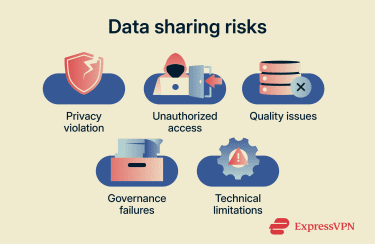 Data sharing introduces privacy, security, and governance considerations that organizations need to manage carefully. If controls are insufficient or data is handled incorrectly, an organization might open itself to risks such as unauthorized access, misuse, or non-compliance.
Common pitfalls in data sharing
- Privacy violations: One of the most common challenges in data sharing is the risk of exposing personal information, like names and addresses. Even when datasets are anonymized, there’s a possibility that individuals could be re-identified by combining them with other data sources, which could create privacy and regulatory risks.
- Unauthorized access: If data sharing systems and access controls aren’t strictly managed, unauthorized users may gain access to sensitive datasets.
- Inconsistent quality: If data is incomplete, disorganized, or outdated, it may affect how it is interpreted or used.
- Lack of governance: Lack of clear policies about who is responsible for data sharing can lead to disputes and compliance issues.
- Technical limitations: When dealing with very large datasets, in particular, some technologies simply aren’t suitable for swift and seamless sharing.
Best practices for data sharing
Given the risks involved with data sharing, organizations typically develop a data management and sharing plan that outlines clear objectives and responsibilities and puts safeguards in place. Following industry best practices helps support secure and compliant data sharing.
Key principles for data sharing
- Defined objectives: Understand why data is being shared, how it will be used, and what the expected outcomes are.
- Data minimization: Minimize the risks of overexposure by only sharing the data necessary for a specific purpose.
- Maintain data quality: Clean, organize, and verify data before exchanging it with other users and systems.
- Anonymize data before sharing: Go through datasets that may contain personal identifying information or sensitive data and anonymize them before release.
- Use secure, appropriate solutions: Assess your options before sharing data and select secure tools that are the most suitable for the type of data being shared.
- Set strict access controls: Control who can access what types of data and what actions they can perform, such as reading, editing, or downloading.
- Legal and regulatory awareness: Understand and abide by relevant laws and data protection standards.
Data governance and compliance
Data governance refers to the policies, processes, and responsibilities that organizations follow when handling data. Strong governance provides clear rules and frameworks to follow, which can help reduce the risk of mistakes being made or sensitive data being exposed.
Organizations also have to keep compliance in mind, making sure they’re fully aware of relevant rules, laws, and industry standards. Regulations such as the General Data Protection Regulation (GDPR) in the EU or the Health Insurance Portability and Accountability Act (HIPAA) in the U.S. set clear requirements for how data should be collected, stored, and shared.
Securing your data during sharing
To reduce the risks of data leaks, breaches, or unauthorized users gaining access to files they shouldn’t, organizations can employ a range of security tools. These include encryption to protect data, both at rest and in transit, and authentication methods such as password-protected logins and multi-factor authentication (MFA). Role-based access control (RBAC) can also help to ensure only those with legitimate reasons to access the data are able to do so.
Data sharing examples
Data sharing occurs across many industries and use cases, supporting a range of operational and analytical activities.
Business data sharing examples
A typical business might share data in the following ways, among many more:
- Customer feedback: Support teams may share feedback and service data with development or product teams to inform updates and changes.
- Financial records: Finance teams may share payment data with fraud detection tools or services to help them identify any suspicious activities.
- Supply chain data: Companies will share inventory and order information with apps, suppliers, and partners to improve logistics and planning.
- Consumer data: Brands might share information like customer names and spending habits with their marketing teams to support marketing decisions.
Industry use cases
- Healthcare: Healthcare organizations, like hospitals and clinics, exchange patient records, test results, trial data, and more to support patient care and the development of new treatments.
- Retail: Retail companies may share sales or inventory data with their partners and suppliers to manage backstock and respond to customer demand.
- Transportation: Navigation apps and platforms can share real-time location and traffic data with users and transport authorities to improve routing, safety, and ease congestion.
- Science: Research teams often publish datasets and study results so they can be reviewed, reused, or built upon by others.
Emerging approaches in data sharing
Data sharing practices continue to evolve alongside changes in technology. Examples include:
- Privacy-enhancing technologies (PETs): These technologies, which include secure multiparty computation and data masking, are used for anonymizing data and removing sensitive elements from datasets before they’re shared.
- Incorporating AI: AI technologies, like large language models, can help clean and organize datasets. However, human oversight is still generally required, especially when handling sensitive or regulated data.
- Cloud-based clean rooms: Data clean rooms (DCRs) are secure, privacy-oriented, cloud-based spaces where multiple parties can share sensitive data while limiting direct access to sensitive information.
FAQ: Common questions about data sharing
What is a data sharing agreement?
What are the types of data sharing solutions available?
How can organizations ensure secure data sharing?
How do I turn off data sharing on apps?
Take the first step to protect yourself online. Try ExpressVPN risk-free.
Get ExpressVPN